ESTATE PLANNING & SUCCESSION ADMINISTRATION

Get prepared for the next generation, today.


From wills & trusts to estate litigation, we're your estate planning solution.

You’ve built something valuable—don’t leave its future to chance. Whether you’re growing a startup, running a family business, or building your personal portfolio, having a smart estate plan in place ensures your legacy stays protected and your loved ones aren’t left guessing.


At SNW, we specialize in fast, thoughtful, and forward-looking estate planning for business owners, professionals, and families who want more than cookie-cutter documents.


What Estate Planning Covers:

  • Wills & Trusts – Distribute your assets the way you want, with clarity and legal strength
  • Powers of Attorney – Make sure someone you trust can act on your behalf in a crisis
  • Healthcare Directives – Communicate your medical wishes clearly, ahead of time
  • Business Succession Planning – Protect the future of your company and your team
  • Digital Legacy Planning – Secure access to your online accounts, crypto, domains, and digital assets


We know your time is limited—that’s why we offer:

  • 48-hour turnaround on will packages
  • Flat-fee transparency (no surprise invoices)
  • Evening and virtual consultations available


Your online life matters. From cloud storage to cryptocurrency, we help you organize and pass on your digital footprint with tools designed for today’s connected world.


Smart estate planning isn’t about expecting the worst—it’s about building with confidence. Let us give you peace of mind, knowing your business, assets, and people are protected.
  • Why you need an estate plan?

    Estate planning and trusts are important tools for any person no matter their means. Having an executed will and planning for the future can ensure peace and stability through the most difficult of times. Sternberg, Naccari & White LLC attorneys work with individuals and businesses on their estate planning needs. Their foundation for a meaningful and impactful estate plan begins with establishing a last will and testament and ensuring that both medical and financial powers of attorney are in place.


    An estate plan is vital to you and your family!

  • If something were to happen to you tomorrow, who would inherit?

    If you do not have a last will and testament, the intestacy laws of Louisiana will dictate who inherits your possessions when you pass on. In almost all cases, our clients want to maintain control of who inherits their estate. Everything from where your assets devolve to who would raise your children or dependents can be dealt with by simply planning ahead.

  • Controlling your assets

    If you do not have a will or trust, you lose the option to plan appropriately based on your individual circumstances and your inheritance may possibly transfer to your children outright in a lump sum. For most parents, the idea of a teenager or child receiving large sums of money is frightening. This fear is heightened if drug or alcohol abuse is a factor. Any level of uncertainty on who inherits what can bring undue stress and tension to your loved ones during an already difficult time. Preparing your will can solve these problems before they start. 

  • Expedited Estate Planning

    Medical emergencies? Upcoming travel plans?  


    There are many situations that can give rise to a need for a fast turn around on estate planning documents. 


    At Sternberg, Naccari & White, we offer two business day turnaround when requested on these important documents. 

  • Permanent or temporary disability

    If you become disabled, who would legally have the right to act on your behalf to pay your bills until you recovered? If you do not have a valid power of attorney in place, court approval appointing a specific person as power of attorney would likely be necessary. As can be imagined, court proceedings are costly and time-consuming. Preparing in advance by having trusts and the appropriate power of attorney documents in place can help to minimize and eliminate these costs. 

  • Succession Administration

    We understand that settling an estate during a time of grief can be overwhelming. Our succession attorneys are here to guide you through the legal process with efficiency, sensitivity, and experienced counsel.


    Succession in Louisiana is the legal process through which a deceased person's estate is settled. This includes: 


    • Validating the will (if one exists) 
    • Identifying and gathering assets
    • Paying debts, taxes, and expenses
    • Distributing remaining assets to heirs or beneficiaries

    If the person passed away without a will (intestate), the court will oversee distribution based on state law. Whether there is a will or not, successions can be complex and time-consuming, especially without legal guidance.


    Every estate is unique. Whether probate is straightforward or more involved, we are committed to providing practical solutions and peace of mind. We offer prompt communication, personalized support, and trusted legal advice throughout the probate process.

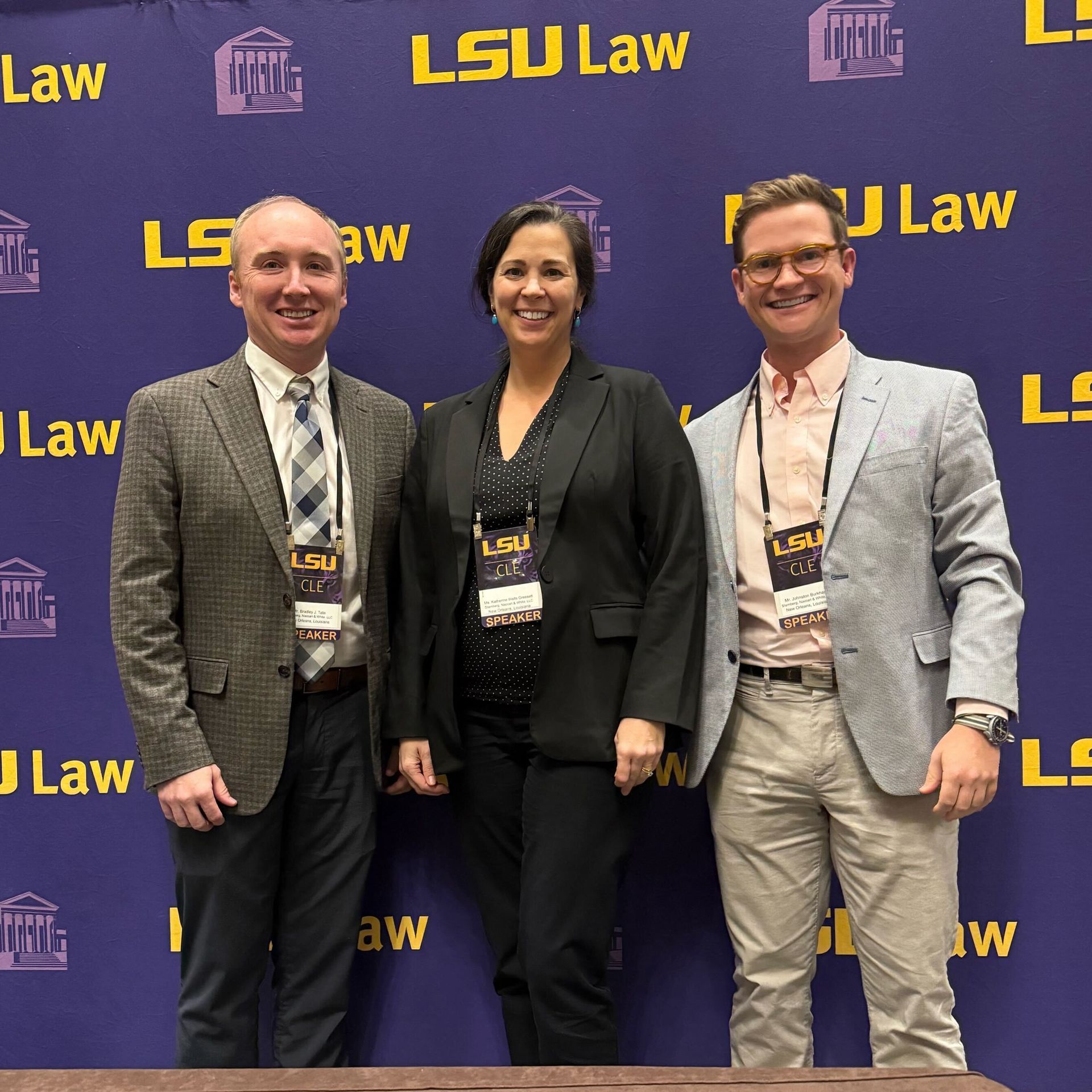
SNW Attorneys Brad Tate, Katherine Gressett, and Johnston Burkhardt at the LSU Law Estate Planning Conference

MEET THE TEAM


Blog

By Johnston Burkhardt March 9, 2026
Estate Planning in Louisiana: Understanding Forced Heirs Louisiana’s forced heirship laws are unique and can significantly affect how a person structures their estate plan. Unlike most states, Louisiana law requires that certain children receive a portion of a parent’s estate, regardless of what a will provides. These children are known as forced heirs.  Under the Louisiana Civil Code, there are two categories of forced heirs. 1. Children Under the Age of 24 A child of the decedent who is 23 years old or younger at the time of the parent’s death is considered a forced heir. If a parent dies while leaving a child under 24, that child is entitled to a reserved portion of the estate known as the forced portion. The forced portion is 25% of the estate if there is one forced heir, or 50% of the estate if there are two or more forced heirs. The remaining portion of the estate (the disposable portion) may be left to anyone the testator chooses. 2. Adult Children with Permanent Disabilities A child of any age can be a forced heir if they are permanently incapable of caring for themselves or managing their affairs due to a mental incapacity or physical infirmity. This category often includes adult children with significant intellectual or developmental disabilities. Because these children may require long-term care and financial support, Louisiana law ensures they cannot be disinherited. Planning Considerations Forced heirship requires careful estate planning. In many cases, a forced heir’s portion can be placed into a trust, allowing the inheritance to be managed responsibly while still complying with Louisiana law. For families with minor children or children with special needs, it is especially important to work with an estate planning attorney to structure a plan that complies with Louisiana law while protecting the long-term interests of the family. If you have questions about forced heirship or need assistance preparing a will or trust, consulting with an experienced Louisiana estate planning attorney can help ensure your plan is legally sound and tailored to your family’s needs. To learn more or to schedule a free consultation, contact Johnston Burkhardt at johnston@snw.law or 504-313-4199.
By Johnston Burkhardt November 12, 2025
When a Movable Becomes Part of the Land: A Quick Guide to Louisiana Acquisitive Prescription In Louisiana, you can become the owner of a “movable” (anything that isn’t real estate - like a mobile/manufactured home, equipment, car, artwork) by acquisitive prescription—ownership earned through possession over time. 3-year route: If you possess the item as owner in good faith and under a document capable of transferring ownership (e.g., a bill of sale), uninterrupted for three years, you acquire ownership. 10-year route: Even without a valid title document or good faith, uninterrupted possession as owner for ten years can also confer ownership. In either case, possession must be public, peaceable, and unequivocal. Time can tack from prior possessors if there’s no interruption. Separately, some movables—like manufactured homes—can be immobilized by judgment, making them legally part of the real estate so lenders and title insurers can treat them like improvements to the land. Our recent case, in a nutshell. A decades-old manufactured home sat on rural property without a recoverable paper title or serial/VIN. The lender required clear title or proof the home was legally part of the land. SNW attorney Johnston Burkhardt came up with a solution: establish ownership by acquisitive prescription and obtain a judgment of immobilization. This was a genuinely unusual problem our firm hadn’t confronted in this exact configuration. We secured the immobilization judgment, clearing the title issue so the transaction could move forward. Why it matters. Missing titles and legacy improvements can stall closings. Pairing acquisitive prescription principles with immobilization can unlock financing, cure underwriting concerns, and deliver marketable title. We like hard problems. If you’re facing a one-off title tangle involving real property or another unusual legal issue, we’re ready to help map the fastest, cleanest route to resolution. For a free consultation, contact Johnston Burkhardt at 504-313-4199 or johnston@snw.law.
Learn More